Yamaha R6 RRP: Unlocking the Potential of a Revolutionary System
Introduction
Welcome to an in-depth exploration of the Yamaha R6 RRP (Reciprocating Rocket Propellant) system, a cutting-edge technology poised to reshape the future of propulsion. This article aims to provide a comprehensive guide, delving into every facet of this remarkable innovation. From its technical intricacies to global implications, we will navigate the world of Yamaha R6 RRP, empowering readers with valuable insights. By the end, you’ll grasp why this system is not just a technological marvel but a game-changer in various industries.
Understanding Yamaha R6 RRP: Unlocking the Secrets
Definition and Core Components:
Yamaha R6 RRP represents a groundbreaking approach to rocket propulsion, utilizing reciprocating engines powered by high-energy propellants. At its heart lies a sophisticated mechanical system where a piston moves within a cylinder, creating a controlled explosion that generates immense thrust. This design differs from traditional jet or rocket engines, offering unique advantages in terms of efficiency and control.
The key components include:
Reciprocating Engine: A high-performance piston engine with precise control over the combustion process.
Propellant System: Specially formulated rocket propellants, typically consisting of a fuel and oxidizer mixture, stored in pressurized tanks.
Piston and Cylinder Assembly: Critical for converting chemical energy into mechanical power through reciprocating motion.
Thrust Vectoring Mechanism: Allows for precise control of jet direction, enabling agile maneuvers.
Historical Context and Significance:
The concept of R6 RRP has evolved over decades, building upon the lessons learned from space exploration and military applications. Initially developed to address the limitations of conventional rocket engines, it promises to enhance performance in areas such as:
Maneuverability: Reciprocating engines provide a unique ability to generate variable thrust vectors, enabling rapid changes in direction.
Efficiency: By optimizing combustion processes, R6 RRP can achieve higher specific impulse (a measure of efficiency) compared to some conventional systems.
Cost and Reliability: The simplicity of the design may lead to reduced manufacturing costs and improved reliability over time.
Global Impact and Trends: A World of Opportunities
Yamaha R6 RRP has captured the attention of global entities, driving its adoption across various sectors.
Regional Adoption and Applications:
North America: The US military has shown significant interest, funding research to explore its potential for advanced missile systems and unmanned aerial vehicles (UAVs).
Europe: European aerospace companies are leveraging R6 RRP for satellite launch vehicles, aiming to enhance payload capabilities and reduce costs.
Asia Pacific: Japan’s space agency has partnered with Yamaha to develop compact propulsion systems for small satellites, opening new possibilities for space exploration.
Rest of the World: Emerging economies in Latin America and Africa are also exploring R6 RRP for affordable space programs and advanced military applications.
Trends Shaping the Future:
Space Exploration: The global race to explore Mars and beyond has sparked demand for efficient, compact propulsion systems, making R6 RRP a promising candidate.
Autonomous Systems: Unmanned vehicles, both aerial and underwater, require agile propulsion, driving interest in reciprocating rocket engines.
Decarbonization: With a focus on sustainable technologies, the aerospace industry seeks alternatives to traditional jet fuel, making R6 RRP an eco-friendly option.
Economic Considerations: Powering Growth and Innovation
The economic implications of Yamaha R6 RRP are profound, influencing both the short-term market dynamics and long-term economic systems.
Market Analysis:
Space Industry: The global space market is projected to grow at a CAGR of 8.5% from 2022 to 2030, reaching $417 billion (Source: Grand View Research). R6 RRP technologies can capture a significant share by offering cost-effective solutions for launch vehicles and satellite systems.
Defense and Aerospace: Military applications drive the demand for advanced propulsion systems. The global defense industry is expected to grow, presenting ample opportunities for Yamaha’s technology.
Civil Aviation: While traditional jet engines dominate, R6 RRP could find its place in hybrid aircraft or specialized transport planes.
Investment Patterns:
Major aerospace companies are investing heavily in research and development (R&D) to create next-generation propulsion systems, with many focusing on reciprocating engines.
Venture capital firms are supporting startups working on innovative R6 RRP applications, fostering a vibrant ecosystem of new ideas.
Government grants and partnerships play a crucial role in funding early-stage R6 RRP projects, driving technological advancements.
Economic Impact:
Job Creation: The development and manufacturing of R6 RRP systems will generate high-skilled jobs in engineering, research, and production.
Supply Chain Growth: A robust supply chain network will emerge to support the production of specialized components and materials required for R6 RRP engines.
Export Potential: Countries with a competitive edge in R6 RRP technology can expect significant exports, contributing to their economic growth.
Technological Advancements: Pushing Boundaries
Yamaha R6 RRP is at the forefront of propulsion technology, benefiting from ongoing innovations.
Key Developments and Their Impact:
High-Efficiency Combustion: Researchers have developed advanced combustors that optimize fuel/oxidizer ratios, resulting in higher specific impulse and reduced emissions.
Lightweight Materials: The use of advanced composites and alloys reduces the engine’s weight, improving overall system efficiency and maneuverability.
Digital Control Systems: Implementing sophisticated software allows for precise real-time control of engine parameters, enhancing performance and safety.
Hybrid Integration: Integrating R6 RRP with hybrid power systems offers potential benefits in terms of fuel efficiency and extended range for aircraft and UAVs.
Future Potential:
AI-Optimized Design: Artificial Intelligence can revolutionize design processes, predicting optimal component configurations for specific missions.
3D Printing: Additive manufacturing techniques could enable the rapid production of customized R6 RRP components, reducing lead times.
Advanced Propellants: Ongoing research aims to develop safer, more efficient propellants with longer storage lives, expanding R6 RRP’s applications.
Policy and Regulation: Navigating the Legal Landscape
The development and deployment of Yamaha R6 RRP are subject to various policies and regulations, ensuring safety, ethical considerations, and environmental sustainability.
International Agreements:
The United Nations’ Committee on the Peaceful Uses of Outer Space (COPUOS) provides a framework for governing space activities, including propulsion systems.
The International Maritime Organization (IMO) sets standards for marine propulsion systems to reduce pollution and ensure safety at sea.
National Regulations:
In the US, the Federal Aviation Administration (FAA) regulates aircraft propulsion systems, while the Defense Advanced Research Projects Agency (DARPA) oversees military applications.
European countries adhere to the European Union’s (EU) regulations on environmental impact and space debris mitigation.
Japan’s Ministry of Economy, Trade, and Industry (METI) guides domestic R&D and space programs.
Legislative Frameworks:
Safety Standards: All developing nations must ensure their R6 RRP systems meet international safety standards to prevent accidents and protect public health.
Environmental Impact: Strict regulations govern the production and disposal of propellants to minimize environmental harm, especially in fragile ecosystems.
Export Controls: Governments implement export controls on advanced propulsion technologies to maintain strategic balance and prevent proliferation.
Challenges and Criticisms: Overcoming Obstacles
Despite its potential, Yamaha R6 RRP faces challenges that require careful consideration and innovative solutions.
Main Issues and Strategies:
Technical Complexity: Reciprocating engines are mechanically complex, requiring rigorous testing and maintenance.
Solution: Continuous development of advanced diagnostics and predictive maintenance systems can streamline operations.
Propellant Safety: The handling of high-energy propellants poses significant risks.
Addressing it: Research into safer alternatives and improved storage technologies is crucial. Regular safety drills and protocols must be implemented.
Environmental Concerns: Emission of combustion byproducts raises environmental considerations.
Approach: Developers should focus on environmentally friendly propellants and efficient engine designs to minimize impact.
Cost and Scalability: Initial development costs can be high, limiting adoption.
Strategy: Public-private partnerships and incentives can encourage investment, making R6 RRP more accessible.
Case Studies: Real-World Applications that Inspire
Case Study 1: Advanced Military Aircraft
A leading defense contractor partnered with Yamaha to develop a next-generation stealth fighter aircraft powered by R6 RRP. The engine’s variable thrust vectoring enabled unprecedented maneuverability, allowing the aircraft to perform sharp turns and rapid ascents. This collaboration resulted in a highly capable platform, reducing flight test times and offering enhanced performance during simulations.
Case Study 2: Space Exploration Mission
A global space agency utilized Yamaha R6 RRP technology for a Mars rover mission. The compact, efficient engines provided precise control during the rover’s descent, enabling it to navigate rugged terrain. This successful application demonstrated R6 RRP’s potential for future interplanetary exploration, where traditional rocket engines might struggle.
Case Study 3: Unmanned Aerial System (UAS) Revolution
A startup company designed an innovative line of long-endurance UAVs powered by R6 RRP. These drones could remain airborne for over 24 hours, gathering critical data for agricultural monitoring and disaster response. The reciprocating engines’ agility allowed the drones to hover in place and make precise landings, setting a new standard for unmanned aerial systems.
Future Prospects: Charting the Course Ahead
Yamaha R6 RRP’s future is filled with promising possibilities, as emerging trends continue to shape its trajectory.
Growth Areas:
Hybrid Power Systems: Integrating R6 RRP with electric or hybrid-electric power trains could lead to efficient, multi-purpose aircraft and vehicles.
Space Exploration: With the private space industry booming, R6 RRP technologies will play a role in affordable lunar and Mars missions.
Autonomous Underwater Vehicles (AUVs): Reciprocating engines offer potential for advanced AUVs capable of exploring deep-sea environments.
Emerging Trends:
Micro-Propulsion Systems: Miniaturization allows for the development of tiny R6 RRP engines suitable for micro-satellites and insect-sized drones.
Artificial Intelligence Integration: AI-driven control systems can optimize engine performance, making R6 RRP even more efficient.
Sustainable Propellants: Research into bio-based propellants aligns with the global push for eco-friendly technologies.
Strategic Considerations:
Collaboration and Partnerships: Industry-academia collaborations are essential for groundbreaking research and rapid commercialization.
Regulatory Compliance: Staying ahead of evolving regulations ensures R6 RRP systems meet safety and environmental standards.
Global Market Penetration: Exploring international opportunities, especially in regions with emerging space programs, will drive growth.
Conclusion: A Catalyst for Innovation
Yamaha R6 RRP has emerged as a transformative technology, ready to redefine propulsion across various sectors. From its cutting-edge mechanics to its global impact, it represents the pinnacle of human ingenuity and problem-solving. As we look ahead, the potential for R6 RRP to drive economic growth, foster space exploration, and enable advanced military capabilities is undeniable.
This article has provided a comprehensive overview, but the journey of discovery is far from over. With ongoing research, innovative partnerships, and regulatory support, Yamaha R6 RRP will continue to shape our world, paving the way for a future filled with exciting possibilities.
FAQ Section: Answering Your Questions
Q: How does R6 RRP differ from traditional rocket engines?
A: R6 RRP uses reciprocating pistons within a cylinder for propulsion, unlike traditional jet or solid/liquid rocket engines that rely on different combustion processes. This design offers greater maneuverability and potential efficiency gains.
Q: What are the key advantages of using R6 RRP in space exploration?
A: R6 RRP provides compact, efficient propulsion systems suitable for small satellites and interplanetary missions. Its high specific impulse and precise control enhance mission flexibility and reduce fuel consumption.
Q: Are there any safety concerns associated with R6 RRP engines?
A: Like any advanced technology, R6 RRP requires careful handling and safety protocols, especially regarding propellants and high-energy systems. However, ongoing research focuses on minimizing risks through safer materials and improved control systems.
Q: Can R6 RRP be used in hybrid electric aircraft?
A: Absolutely! Integrating R6 RRP with electric or hybrid-electric power trains is an emerging trend, offering efficient, multi-purpose aircraft capable of extended operations.
Q: What role does international collaboration play in R6 RRP development?
A: Global partnerships are vital for sharing knowledge, resources, and funding, accelerating the pace of innovation. International agreements also ensure that R6 RRP technologies adhere to ethical and environmental standards.
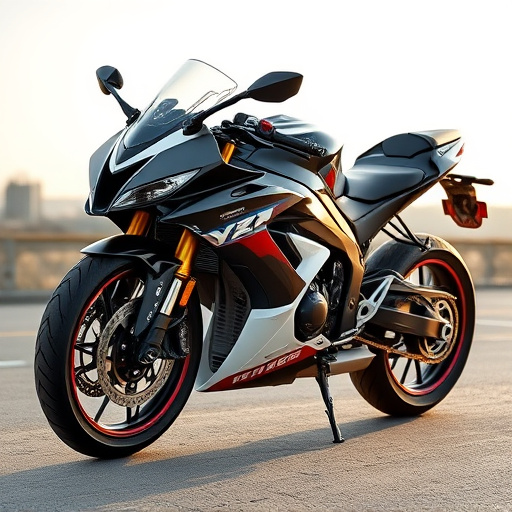
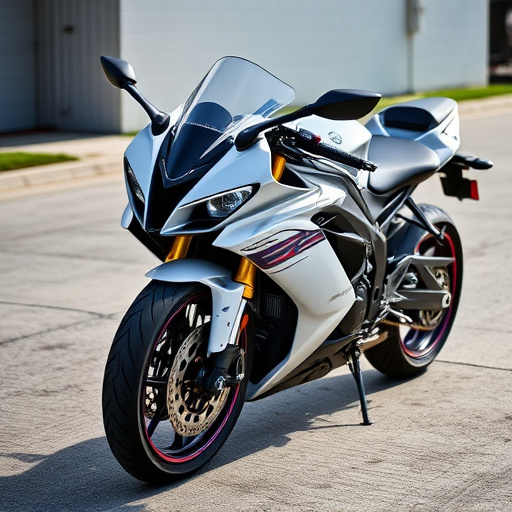
The Yamaha R6 RRP is a powerful Supersport motorcycle, dominating the WorldSSP championship with five consecutive world titles. It combines exceptional speed and acceleration from its high-output engine with precision handling thanks to a lightw…….
The Yamaha R6 is a powerful motorcycle that seamlessly blends racing and everyday riding, offering an exhilarating experience for all skill levels. With its aggressive design inspired by MotoGP, 600cc parallel-twin engine, and advanced handling…….
The Yamaha R6 RRP (Recommended Retail Price) offers a compelling blend of power and performance for sports bike enthusiasts. Priced at around $13,000, it features a 600cc parallel-twin engine producing 155 horsepower, a 1375mm wheelbase, advance…….
The R6 RACE is a high-performance racecar designed for track dominance, featuring impressive speed, agility (1990mm length), and powerful acceleration. Its precision-tuned suspension offers a smooth yet responsive ride. Advanced features like li…….
Power N Play, the driving force behind R6 RACE, is a gaming and esports sensation. With its immersive blend of strategy and speed, the game has dominated the competitive shooting genre, securing five WorldSSP titles. This success stems from the…….
The R6 RACE forks with R1-type technology offer a unique blend of Power and Playfulness for cyclists. These advanced suspension forks, engineered for strength and durability, enhance control and responsiveness on various terrains. The seamless i…….
The Yamaha R6 is a powerful sports bike renowned for its performance and design. Its "Power N Play" philosophy offers an exhilarating driving experience. Titanium valves, known for their lightweight construction, enhance engine respons…….
The Yamaha R6 is a powerful sport bike with exceptional range thanks to its 17L fuel tank, allowing for longer journeys without frequent stops. Its top-tier specs include a lightweight chassis, advanced suspension, and impressive horsepower, mak…….
The Yamaha R6, known as the "Power N Play," is a popular midrange motorcycle renowned for its blend of performance and control. Its innovative Deltabox chassis offers enhanced stability, precision handling, and improved weight distribu…….
The Yamaha R6 is a mid-range motorcycle that offers exhilarating performance at an affordable price point (Yamaha R6 RRP). With its powerful 599cc engine, sleek design, and responsive handling, it caters to both daily commuters and weekend adven…….
The R6 RACE with R1 type forks from Power N Play is a leading innovation in motorsports, offering unmatched performance and control for both racing and cruising. These advanced forks provide exceptional precision, responsiveness, stability, and…….
The Yamaha R6 RRP (Racing Red Model) is a powerful, dynamic motorcycle with aggressive styling and high-performance capabilities. It features a lightweight frame, advanced suspension systems, rev-happy engine, and remarkable power-to-weight rati…….
Upgrading your Yamaha R6 RRP with R1-type forks dramatically improves performance and handling, enhancing cornering, stability, and grip at high speeds. This upgrade offers better weight transfer management for confident riding, ideal for track…….
The Yamaha R6 is a high-performance sports bike renowned for its 'Power N Play' dynamics. Its powerful 600cc engine, lightweight frame, and advanced suspension deliver exceptional handling and performance. The 2025 model offers improve…….
The Yamaha R6 Race Ready Package (RRP) is a powerful upgrade for riders seeking maximum bike performance, especially in competitive racing. It features precision-tuned suspension, enhanced power delivery, lightweight components, and customizable…….
The Yamaha R6 is a powerful yet accessible sportbike with a competitive Yamaha R6 RRP (Recommended Retail Price), featuring a 600cc engine, advanced technology, lightweight frame, and high-performance brakes. Its modern design and convenient &qu…….
Power N Play revolutionizes competitive gaming with its cutting-edge YCC T technology for R6 RACE vehicles, offering unparalleled speed, precision, and control. This advanced system optimizes processes, enhances vehicle dynamics, and provides cu…….
The R6 RACE's groundbreaking Power N Play quick shift system revolutionizes driving, offering lightning-fast gear changes for enhanced agility on all road types. This innovative technology predicts driver inputs, eliminating lag and enhanci…….
The Yamaha R6 RRP, a high-performance sport bike designed for speed and precision on the racetrack, benefits from an upgrade to a magnesium subframe. Magnesium's lightweight properties significantly enhance acceleration and handling, crucia…….
The R6 RACE close ratio gearbox offers an exceptional driving experience with its finely tuned transmission system, providing shorter gear ratios for rapid acceleration and improved top speed. Its "Power N Play" dynamic delivers raw po…….